For plant owners, the useful part of a trend report is the equipment implication. This article works from the data towards that conclusion.
The infrastructure pipeline and equipment demand
Large infrastructure programmes create demand in waves. Earthworks and crushing come first, then concrete production for structures, then paving and finishing. Equipment suppliers who understand the sequence can plan production and stock accordingly.
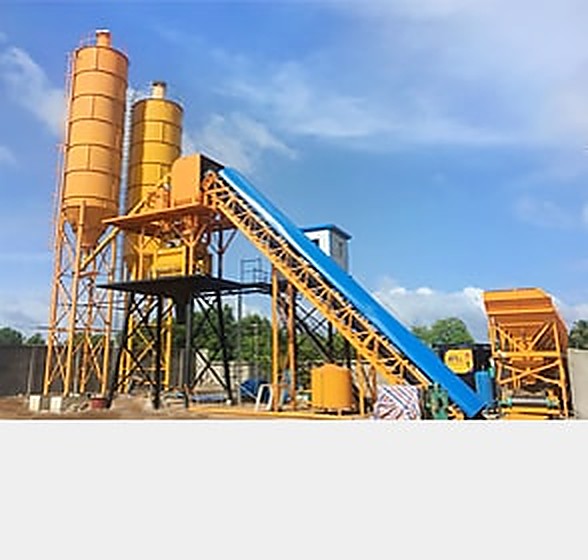
For buyers, the same sequence is a warning about timing. Ordering a batching plant when the programme reaches the concrete phase often means joining a queue, and lead times extend exactly when the project needs the plant most.
Skills shortage and equipment design
A shortage of experienced operators and technicians is reported in most markets. Equipment design responds in two ways: simpler interfaces that reduce training time, and diagnostics that tell a technician what to check rather than requiring him to interpret symptoms.
Suppliers who provide structured training and clear documentation reduce the operational risk for a buyer. In a market where experienced staff are scarce, that support is a genuine part of the product.
Indicator
What it signals
Lead time to equipment demand
Infrastructure budget approvals
Programme starts
6 - 18 months
Cement consumption
Active concrete production
0 - 6 months
Ready-mix plant count
Commercial supply capacity
3 - 12 months
Residential permits
Housing construction
6 - 12 months
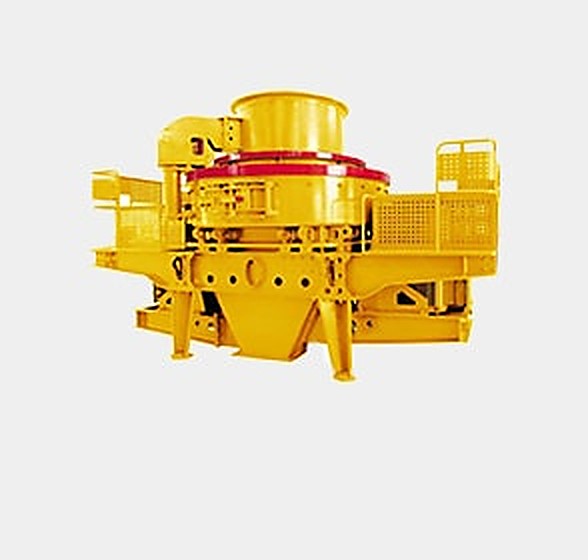
Vertical shaft impact crusher producing manufactured sand — HAMAC equipment supplied to concrete and aggregate projects worldwide.
What buyers should watch in the next cycle
Three developments are worth tracking: the cost of cement and its effect on mix design, the availability of skilled operators, and the financing conditions for small and mid-size contractors. Each changes what kind of equipment sells, independently of the total construction volume.
A buyer who understands these drivers can time an order better and specify a machine that will still be appropriate when the market shifts. That is a more reliable advantage than negotiating the last few percent of the purchase price.
Where global demand is moving
Concrete equipment demand is shifting towards markets where infrastructure spending is rising and where local ready-mix capacity is still being built. That combination describes parts of Africa, South and Southeast Asia and the Middle East more accurately than it describes mature markets, where demand is mostly replacement and upgrade.
The consequence for buyers is that equipment availability and delivery time have become as important as price. A plant that arrives two months late costs more than a plant that costs slightly more and arrives on schedule.
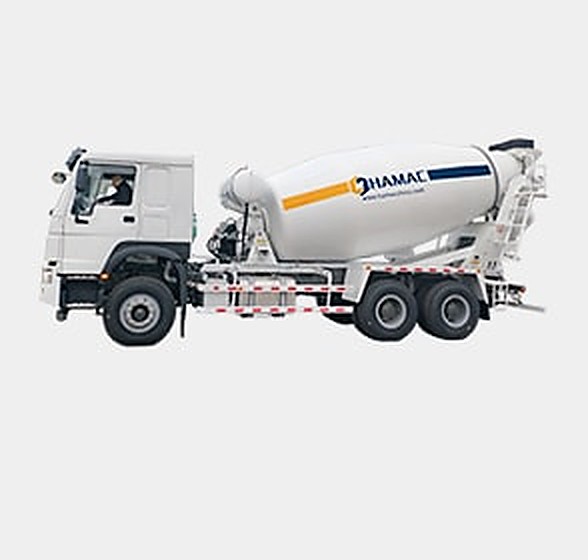
Concrete mixer truck discharging ready-mix concrete — HAMAC equipment supplied to concrete and aggregate projects worldwide.
Decarbonisation at the equipment level
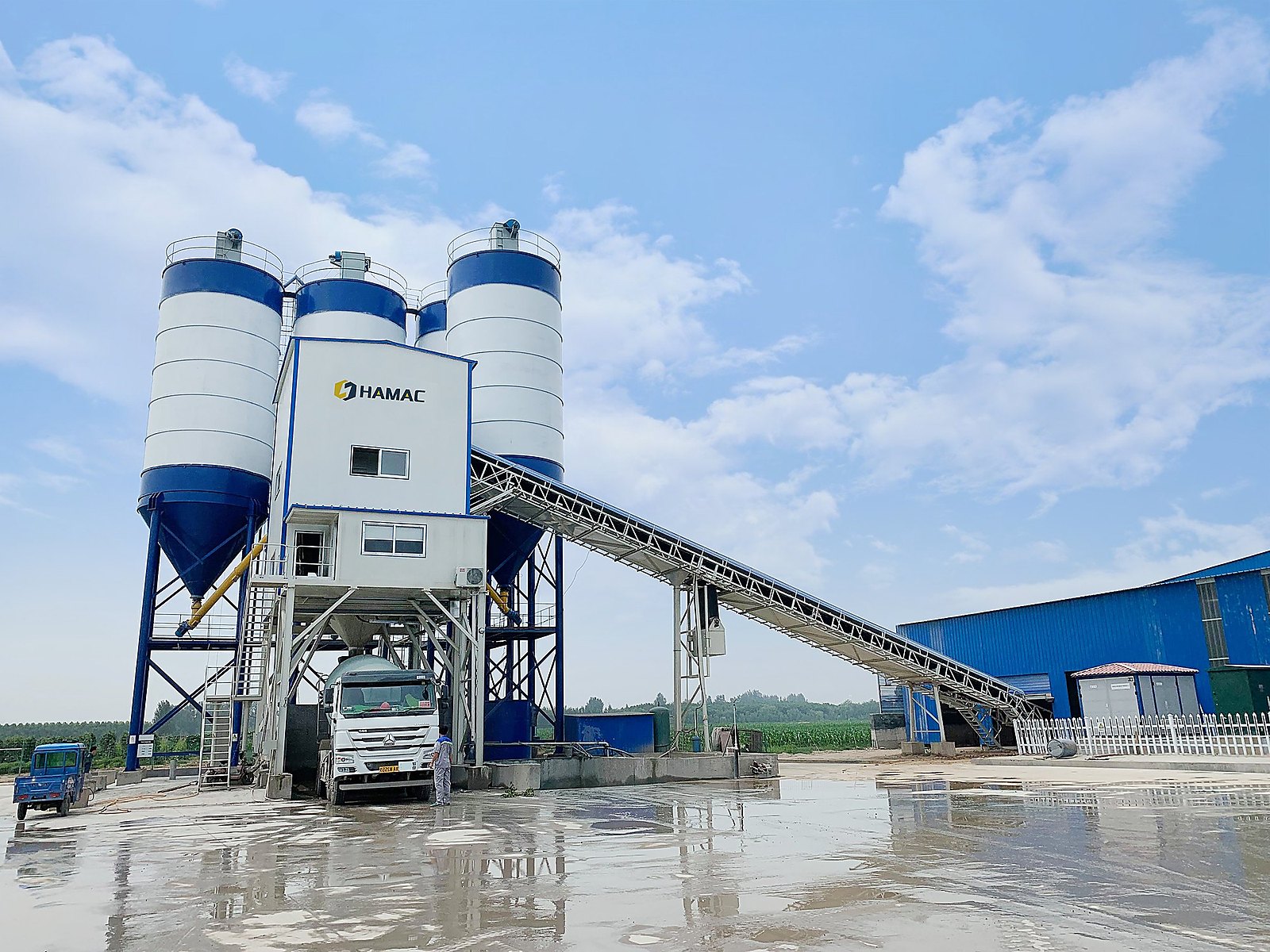
Most of the carbon in concrete comes from cement, not from the plant. Equipment can still make a measurable difference: accurate batching avoids over-cementing, moisture compensation reduces water and cement variation, and efficient mixers shorten cycle time per cubic metre.
Electrification of plant drives and the use of variable-frequency controls reduce electricity consumption, and solar-ready control cabins are appearing on new installations in sunny markets. These measures are incremental, but they are also the ones a plant owner can act on without changing the mix design.
Automation and data in batching plants
Automation has moved from sequence control to data. A modern plant records every batch, every weighing and every deviation, and can send that record to a customer or a quality system. That traceability is increasingly a condition of supplying major projects.
The practical benefit for the owner is diagnostic. When a batch is rejected, the record shows whether the cause was material, weighing, mixing or delivery. Without the record the cause is a matter of opinion.
Manufactured sand and aggregate supply
River sand is restricted or unavailable in many markets, and manufactured sand has become the default fine aggregate for concrete. The change affects the batching plant as much as the crusher: finer material, higher water demand and more variation between deliveries.
Plants that handle manufactured sand well share three features: covered storage, moisture measurement and a mix design that accounts for the filler content. These are inexpensive compared with the cost of rejected concrete.
Where to go next
For the equipment side, see equipment solutions; for plant-level design and layout questions, see global project references. If the project is in Turkey or a comparable market, the HAMAC team can provide reference installations and a configuration proposal against your daily output target.
HAMAC can prepare a layout drawing and a budgetary quotation against your daily output target, including the civils information your contractor will need.
Need help applying this to your project?
Send your material type, target output and site conditions to HAMAC engineers. You will receive a practical equipment configuration and a clear quotation, normally within one working day.
Questions about this topic
What is the biggest sustainability lever in a batching plant?
Batching accuracy. Over-cementing to compensate for variation wastes the most carbon-intensive input in concrete.
Is manufactured sand suitable for structural concrete?
Yes, when the grading is consistent and the fines content is controlled. Variability is the main risk, not the material itself.
Why do lead times extend during a construction boom?
Because demand for the same components and the same production slots rises at the same time. Ordering early in the programme avoids the queue.
H
HAMAC Machinery Editorial Team
Written and reviewed by engineers and sales specialists who configure concrete batching plants, crushers, mixers and pumps for projects in more than 180 countries. Content is based on factory testing data and field feedback from delivered equipment.





 Company News