A practical method to size a concrete batching plant: work back from daily volume and working hours, add a peak-demand margin, and verify the mixer cycle time.
Start from the concrete you actually need
Plant capacity is claimed in cubic metres per hour, but the number that matters is the volume you must deliver per day. Begin with the daily demand, divide by the effective working hours, and then add a margin of 20 to 30 percent for peak days, waiting trucks and mixers that are slower than the nameplate figure.
For a ready-mixed supplier serving three truck mixers with an 8 m3 drum, each doing six trips in a shift, the daily demand is about 144 m3. Over an eight-hour shift that is 18 m3/h; with a 25 percent margin the plant should be rated near 23 m3/h, which points to a 25 to 35 m3/h model rather than the smallest unit available.
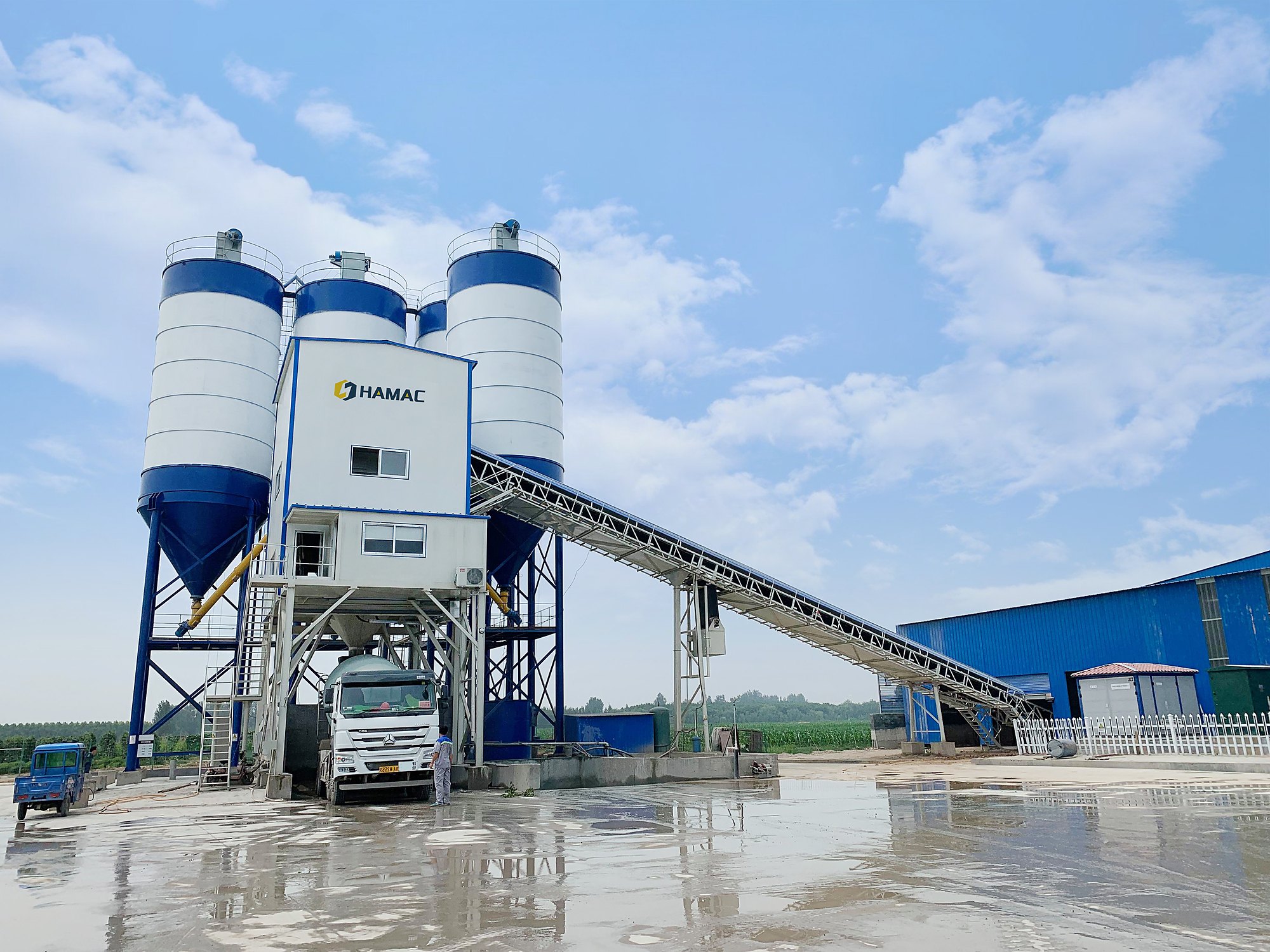
A stationary concrete batching plant with silos and conveyor during operation
Check the mixer cycle, not just the nameplate
A plant's real output is set by the mixing cycle. A twin-shaft mixer may complete a cycle in 30 to 45 seconds, while a drum mixer can take 60 to 90 seconds for the same batch. Two plants with the same nominal rating can therefore differ by a third in real output.
Nominal rating
Typical mixer
Cycle time
Practical output
25 m3/h
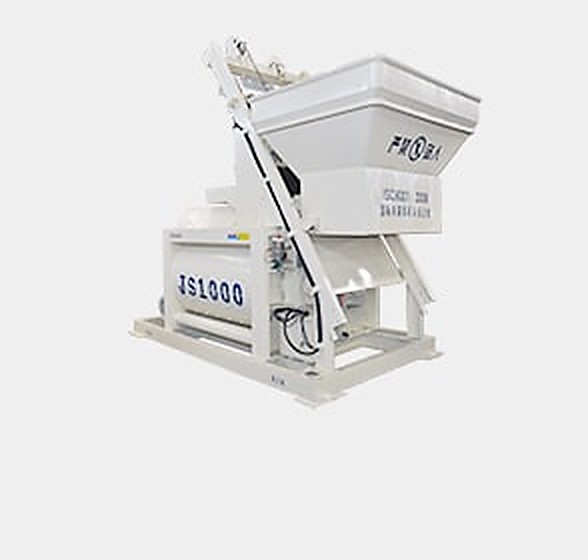
JS500 twin-shaft
30-40 s
20-25 m3/h
50 m3/h
JS1000 twin-shaft
35-45 s
40-50 m3/h
75 m3/h
JS1500 twin-shaft
40-55 s
60-75 m3/h
90 m3/h
JS2000 twin-shaft
45-60 s
75-90 m3/h
Other constraints to check before you buy
Even with the right mixer, the plant can be held back by its surroundings.
Aggregate supply: can loaders keep the hoppers full during peak hours?
Truck access: is there room for mixers to queue and turn without blocking the weighbridge?
Power and water: are the supply and pressure adequate for the full rated output?
Cement and admixture: is the silo and dosing capacity matched to the mix design?
HAMAC concrete batching plant - 1 supplied by HAMAC.
Need help applying this to your project?
Send your material type, target output and site conditions to HAMAC engineers. You will receive a practical equipment configuration and a clear quotation, normally within one working day.
Questions about this topic
What size batching plant do I need for 200 m3 per day?
At 8 effective working hours you need about 25 m3/h before margin, so choose a plant rated around 32 to 35 m3/h to leave headroom for peak demand and truck waiting.
Is a bigger plant always better?
No. An oversized plant wastes power and capital if truck supply or aggregate supply is the real bottleneck. Size the plant to the whole operation, not just the mixer.
How much does mixer cycle time affect output?
A twin-shaft mixer at a 35-second cycle can outperform a drum mixer at 80 seconds by roughly a third, even at the same nominal plant rating.
H
HAMAC Machinery Editorial Team
Written and reviewed by engineers and sales specialists who configure concrete batching plants, crushers, mixers and pumps for projects in more than 180 countries. Content is based on factory testing data and field feedback from delivered equipment.





 Company News