




What this video shows
- Concrete slump, vibration frequency and the resulting surface finish
- Production rate per day and the supply chain needed to sustain it
- Curing, texturing and joint sawing that follow the paver
Why it matters on site
Inset and offset slipform pavers, curb and gutter machines and texture-curing equipment filmed on highway, runway and barrier projects. The clips show mould change, stringline control, slump management and the daily production a paving train can sustain. Buyers usually want to see how the machine behaves under load before they commit to a configuration, and footage answers questions that a specification sheet cannot.
Watch the sequence from set-up to discharge. Pay attention to how the operator controls the pour, how much space the machine needs around it, and what the crew does between cycles. Those details usually decide whether a model fits a site as well in practice as it does on paper.
At a glance
| Paver type | Inset or offset slipform |
|---|---|
| Paving width | 2.5 to 9 m depending on mould |
| Production | 300 to 1200 m per day |
| Control | Stringline or 3D total station |
| Equipment shown | Alignment control |
| Filmed at | Workshop / customer site |
Questions buyers ask
Can a slipform paver work on a curve?
Yes. Steering sensors follow the stringline and the tracks are counter-rotated to hold the radius. Tight radii below 30 m usually need a smaller offset paver or a widening pass.
What is the advantage over fixed-form paving?
Slipform removes the formwork, the stripping crew and most of the manual finishing. On long runs the saving in labour and formwork usually exceeds the higher machine cost, and the pavement has fewer transverse joints.
How much concrete does a slipform paver need per hour?
A 4 m wide, 250 mm thick pavement paved at 1.5 m per minute consumes about 90 m3 per hour. The batching and trucking plan has to match that rate; a paver stopped in the run creates a cold joint that has to be cut out.
Related videos
More footage from the same equipment group.
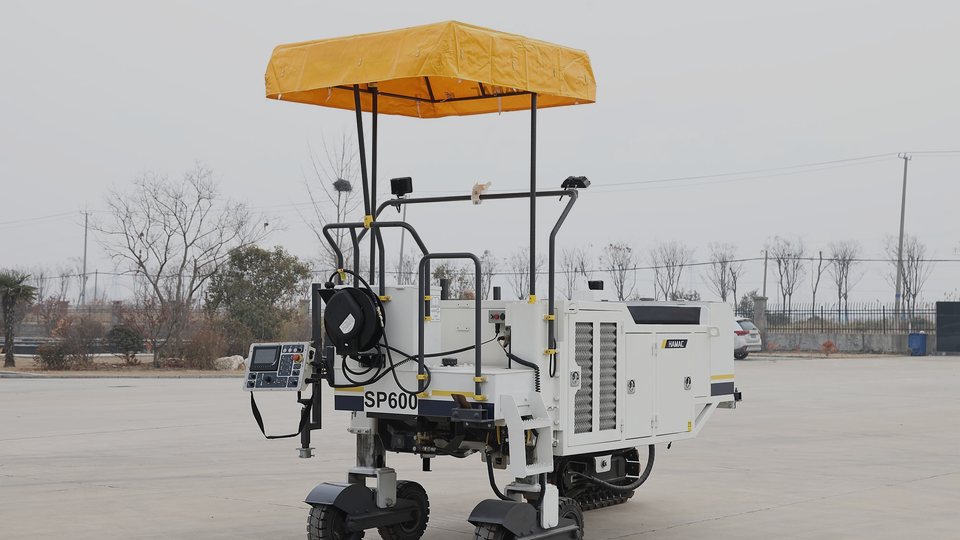 Why Highway Barriers No Longer Use Traditional Molds | The Science of Slipform PavingSlipform pavers
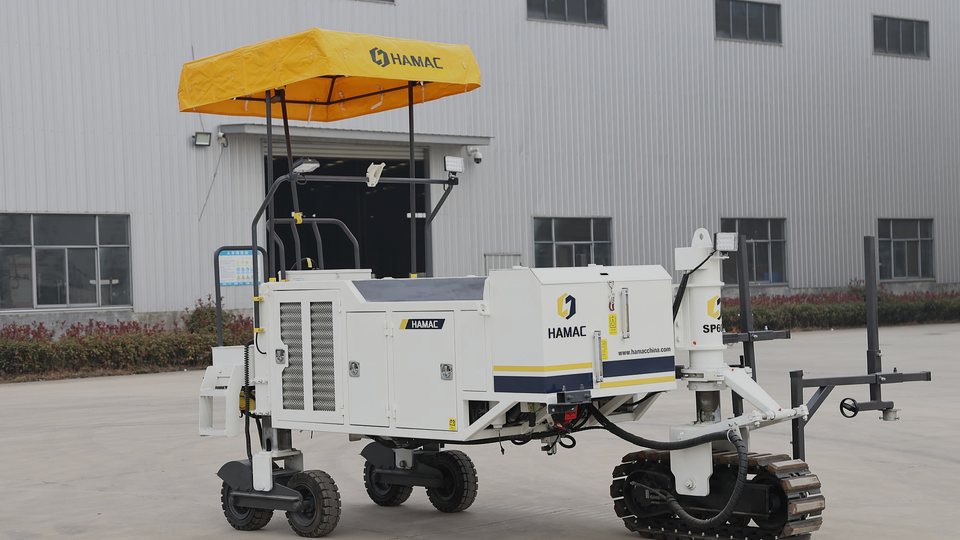 Inset Slipform Paver: Precision Engineering for High-Strength Concrete Pavements and RunwaysSlipform pavers
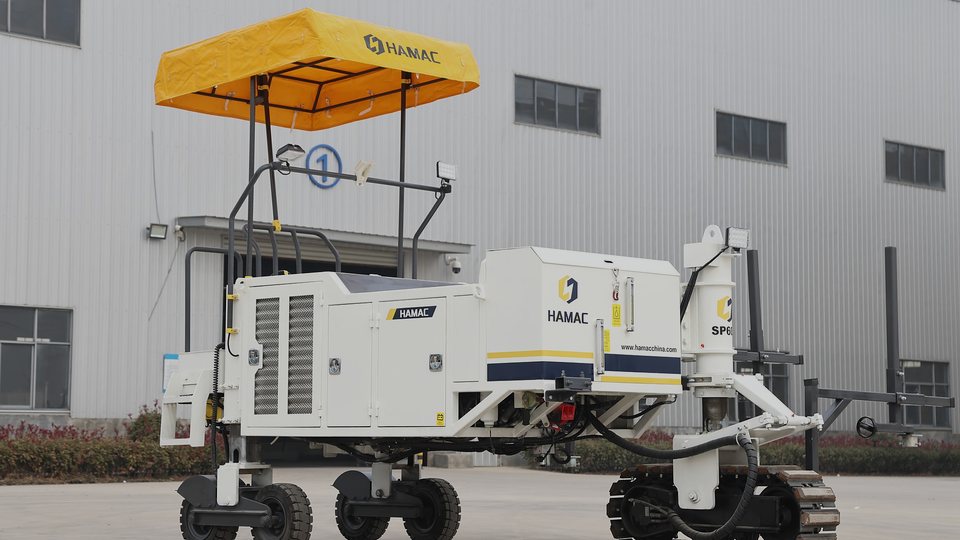 Offset Slipform Pavers | Automatic High-Precision Paver for Concrete Curb and GutterSlipform paversMega Project Spotlight: How 6 HAMAC Pavers Built a 50 km Highway in 30 DaysSlipform pavers
Want to see this machine in person?
Factory visits in Zhengzhou and reference sites in your region can be arranged before you order.