




In this article
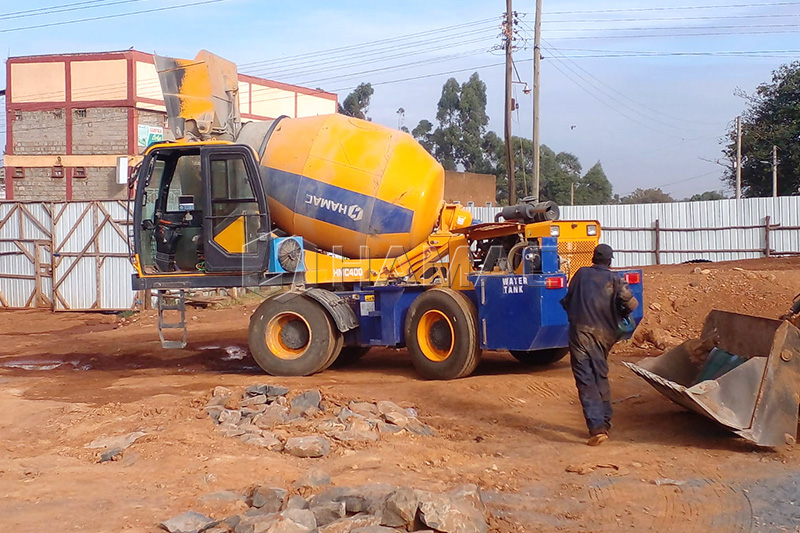
HMC350 self-loading concrete mixer (three units) and HMC400 self-loading concrete mixer (two units) have recently been shipped by HAMAC to a client in Peru, to work in a desert-edge area where there is strong demand for housing construction and rental equipment.
These machines will produce concrete directly on site for new houses and small buildings, and at the same time will be rented to local contractors as the Peruvian economy and housing demand continue to grow.
As a mini mobile concrete batching plant, each self-loading concrete mixer combines loading, weighing, mixing, transportation and discharging in one unit, allowing the client to produce fresh concrete independently and efficiently in remote areas without a stationary batching plant.
The HMC350 has an output of 3.5 m³ per batch and the HMC400 4.0 m³ per batch, both with strong one-piece chassis and 4×4 wheel drive suitable for rough desert ground.
The customer chose three HMC350 and two HMC400 units to cover different job sizes, from small house slabs and foundations to larger beams and columns in new residential districts near the desert.
Thanks to the self-loading bucket, electronic weighing system and 270-degree rotating drum, operators can load aggregates, cement and water directly, control the mix proportions and pour concrete precisely where it is needed.
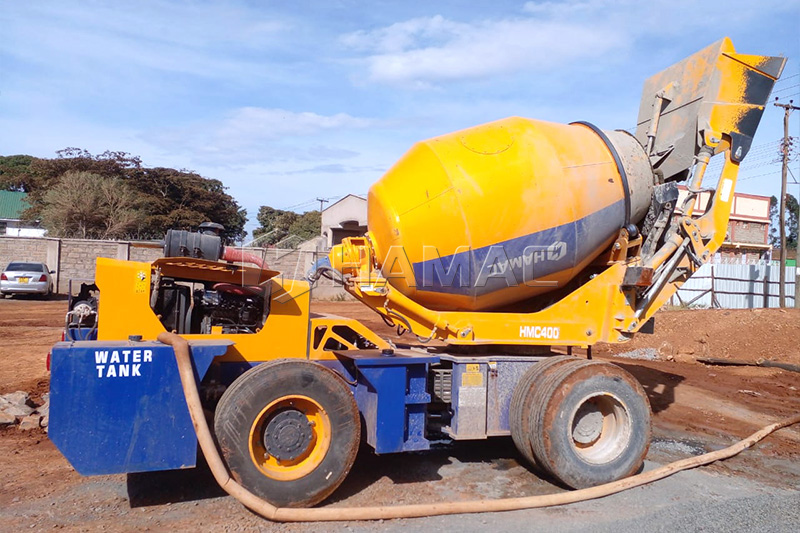
HMC350 self-loading concrete mixer
In this Peruvian project, the machines will be used both for the client’s own housing projects and as rental equipment for other contractors in the area.
With the continuous development of the local economy and the increase in housing demand, self-loading mixers become an ideal solution to provide flexible, mobile and cost-effective concrete production without building permanent plants.
HAMAC equipped the HMC350 and HMC400 self-loading concrete mixers with famous brand diesel engines, reliable hydraulic systems and comfortable cabins with air conditioners, ensuring stable performance and good working conditions for operators in hot and dusty environments.
Water pumps and tanks allow the mixers to draw water from available sources and control water dosage through the flow meter, guaranteeing consistent concrete quality even far from city infrastructure.
Before delivery, all five machines were tested in HAMAC’s factory, including loading, mixing and drum rotation functions, as well as the weighing and hydraulic systems.
The units were then cleaned, protected and loaded into containers or shipped by RORO vessels according to the customer’s shipping plan, ensuring they arrive in Peru ready for immediate work.
HAMAC also provided operation and maintenance manuals, spare parts suggestions and online technical support for the Peruvian client.
Our after-sales team will assist with training local operators, helping them to use the self-loading concrete mixers safely and efficiently for both housing projects and rental business.
This shipment of three HMC350 and two HMC400 self-loading concrete mixers to Peru once again confirms HAMAC’s role as a pioneer and revolutionary of concrete production and our commitment to supporting housing development in emerging markets.
With more HAMAC self-loading mixers working in Latin America, we will continue to provide high-quality equipment and considerate service to our partners.
Need help applying this to your project?
Send your material type, target output and site conditions to HAMAC engineers. You will receive a practical equipment configuration and a clear quotation, normally within one working day.
Questions about this topic
How do I compare quotations from different suppliers fairly?
Compare the same scope: mixer type and brand of core components, batching accuracy, control system, silo capacity, steel plate thickness and the spare parts list. A lower price often reflects a smaller mixer or thinner steel structure.
What payment terms does HAMAC normally accept?
The standard arrangement is a deposit with the balance settled before shipment. Terms can be discussed for repeat customers and project-based contracts.
Do you provide CE or other certification documentation?
Certification requirements vary by destination. HAMAC can supply CE documentation for applicable equipment and prepare the shipping and customs paperwork required by the importing country.
How do freight and container loading work?
Plants are packed into standard containers with reinforced frames. HAMAC confirms the container plan before booking, which keeps freight costs predictable and reduces the risk of damage in transit.
Keep reading
All news
Related articles
 Company News
HAMAC Expands Concrete Batching Plant Assembly Capacity
HAMAC Expands Concrete Batching Plant Assembly Capacity: how the process works at HAMAC, what is checked before shipment and what buyers can
Read more Exhibitions
HAMAC Highlights Concrete and Aggregate Equipment Solutions for Construction Projects
HAMAC Highlights Concrete and Aggregate Equipment Solutions for Construction Projects Equipment portfolio covers concrete production, mixing
Read more Company News
How HAMAC Controls Quality From Steel Cutting to Final Load Test
How HAMAC Controls Quality From Steel Cutting to Final Load Test: how the process works at HAMAC, what is checked before shipment and what bu
Read more