




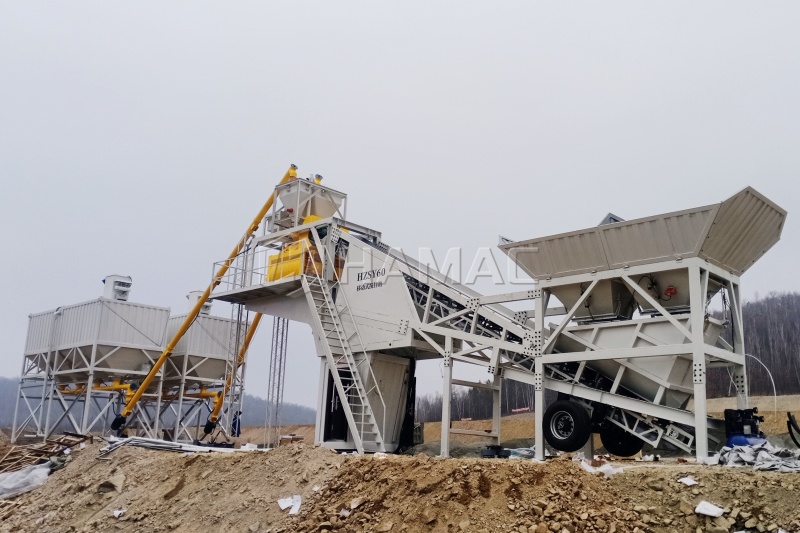
In this article
For highway and bridge contractors, a mobile concrete batching plant is often the most efficient way to supply fresh concrete to long and scattered job sites. Instead of relying on a distant stationary plant, the mobile batching plant can be moved along the road alignment or placed near bridge heads, reducing haul distance and improving concrete quality. This article introduces what a mobile concrete batching plant is, how it works, and how to use it properly on highway and bridge projects.
A mobile concrete batching plant is a concrete mixing equipment that integrates aggregate storage, weighing, conveying, mixing, discharging and automatic control systems on one or several trailer units. Compared with a stationary plant, it is designed to be quickly towed, installed and commissioned, so it can follow the progress of highway and bridge construction. The main components include a mobile aggregate batching unit, a mixer platform with weighing systems, screw conveyors, cement silo or horizontal silo, water and admixture systems and an integrated control cabin.
Why use a mobile plant for highway projects?
Highway projects are typical linear projects: the construction area is long, work zones move as the project progresses and the structures are scattered along the route. If concrete has to be transported from a distant stationary plant, the haul distance and time can easily become too long, causing slump loss and quality problems. By placing a mobile batching plant close to the active highway section, contractors can shorten haul distance, reduce fuel consumption and supply concrete with more stable workability.
Why use a mobile plant for bridge projects?
Many bridge projects are located in mountain valleys, over rivers or at interchanges where land is limited and access is difficult. In these conditions, it is not convenient to build a large stationary plant, but a compact mobile plant can be installed near the bridge head or on a nearby platform. The mobile batching plant can provide concrete for foundations, pile caps, piers, abutments, decks and approach slabs, either for cast-in-place construction or for precast segments produced in a small casting yard.
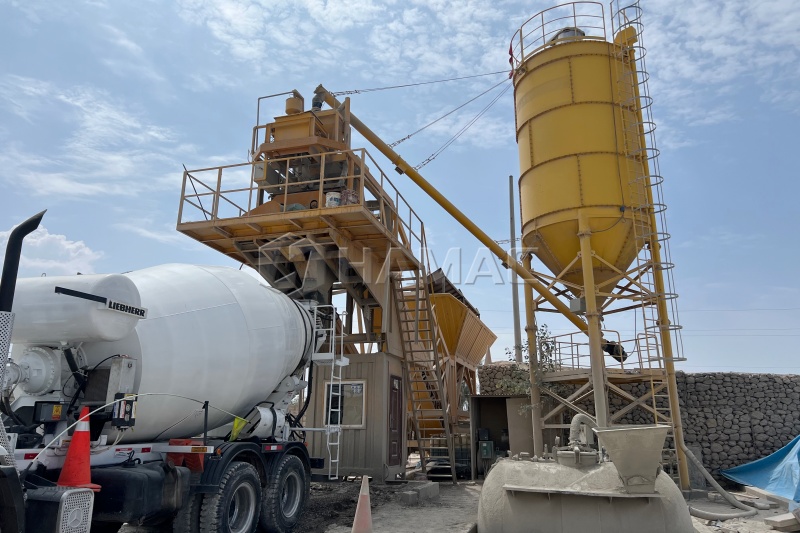
Mobile concrete batching plant supplying concrete for bridge piers
On the jobsite, the working process of a mobile concrete batching plant is similar to a stationary plant. Aggregates are loaded by a wheel loader into separate bins, then weighed by load cells and transferred by belts to the mixer. Cement, water and admixtures are weighed according to the mix design and discharged into the mixer as well. After mixing, the concrete is discharged into transit mixer trucks or dump trucks, which deliver it to the road paving machine, slip-form paver, concrete pumps or directly into bridge formwork.
For highway projects, the mobile batching plant should be installed on a flat, compacted area near the current main work zone, with enough space for aggregate stockpiles and truck circulation. The plant should be positioned so that mixer trucks can reach the paving front or structures without crossing live traffic lanes and without long detours. As the construction front moves along the highway, the plant can be dismantled, folded onto its trailer and moved to the next section, then quickly installed again to continue production.
For bridge projects, the plant is usually located close to one abutment, a temporary access road or a casting yard. When the bridge is over a river or valley, the plant can be placed on a nearby high platform and the concrete is transported by trucks down to the piers and abutments. For precast girders or segments, the mobile plant feeds concrete directly to the casting beds in the yard, which reduces dependence on external ready-mix supply and improves schedule control.
To choose the right mobile batching plant for a highway or bridge project, it is important to calculate the peak hourly concrete demand based on daily volume and pouring schedule. In practice, the actual output of a plant is usually about 70–80% of its rated capacity, so some safety margin should be included when selecting the model. For small highway sections and small bridges, a 25–35 m³/h mobile plant may be enough, while larger highways and bridges may require 50–60 m³/h or even higher capacity.
When using a mobile batching plant, regular calibration of scales, proper moisture correction for aggregates and consistent mixing time are essential for concrete quality. The plant should be operated according to a clear concrete supply plan that coordinates batching, transport, pumping and placement, especially for continuous pours such as bridge decks and long pavement sections. With correct planning and operation, a mobile concrete batching plant can significantly improve efficiency and concrete quality for highway and bridge projects.
Need help applying this to your project?
Send your material type, target output and site conditions to HAMAC engineers. You will receive a practical equipment configuration and a clear quotation, normally within one working day.
Questions about this topic
How do I choose batching plant capacity?
Estimate the concrete volume per day, then divide by the effective working hours. Add 20 to 30 percent headroom for peak demand. A 35 m³/h plant suits small contractors; 50 to 75 m³/h suits commercial supply; 90 m³/h and above suits large projects.
Which mixer type should I choose for my concrete?
Twin-shaft compulsory mixers are the default for commercial concrete because of short mixing cycles and uniform output. Planetary mixers suit high-grade or special mixes, and drum mixers suit smaller, simpler operations.
How often should wear parts be replaced?
Mixer blades and liners are inspected weekly and normally replaced every 6 to 12 months depending on abrasive content. Belt scrapers, screen meshes and pump wear plates follow the same inspection rhythm.
Can the plant be upgraded later?
Yes. Modular batching plants allow additional silos, a larger mixer or an upgraded control system to be added later without replacing the whole structure.
Keep reading
All news
Related articles
 Exhibitions
HAMAC Highlights Concrete and Aggregate Equipment Solutions for Construction Projects
HAMAC Highlights Concrete and Aggregate Equipment Solutions for Construction Projects Equipment portfolio covers concrete production, mixing
Read more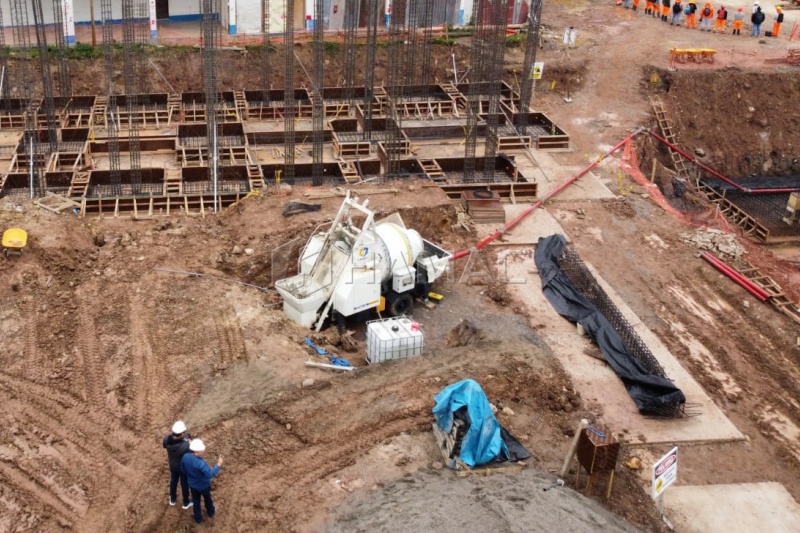 Trade News
HAMAC Trailer Concrete Mixer Pump for Foundation Construction in Peru
Explore how a HAMAC trailer concrete mixer pump supports foundation construction in Peru. See how integrated concrete mixing, pumping and pip
Read more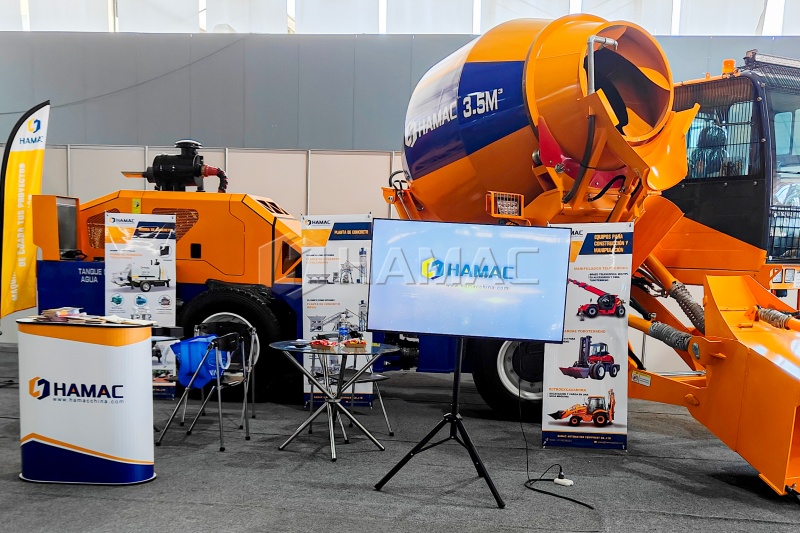 Company News
HAMAC Showcases Group Strength and Concrete Solutions at EXCON 2026
HAMAC showcases its concrete equipment solutions at EXCON 2026 in Peru, with Group leadership, Manager Teo and Peru branch head Carol highlig
Read more