Specification sheets describe a machine, not a working installation. This article looks at a concrete pump in the context of a contractor on a housing and road programme and crushed limestone, and at the details that decide whether it performs as expected. The reference case is a 90 m3/h operation in Iraq.
The operating context matters as much as the machine specification. In Iraq, a contractor on a housing and road programme works in very hot, dry summers and cool winters. A plant specified for this market normally includes high-temperature cooling, dust filtration and heat-rated components, and the layout is planned around crushed limestone rather than a generic aggregate.
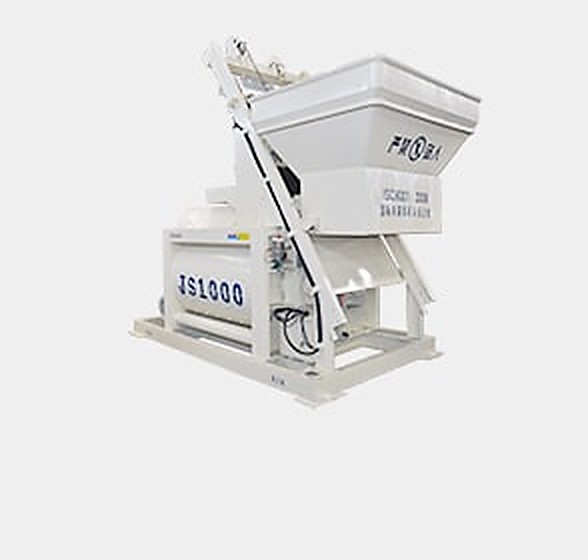
Mixer pump: one machine for mixing and placing
A concrete mixer pump combines a drum or twin-shaft mixer with a pump on a single chassis. It is used where concrete is mixed on site rather than delivered, typically on rural projects, small buildings and sites where ready-mix supply is unreliable or expensive.
Output is limited by the mixing cycle rather than the pump, so the practical figure is lower than the pump rating suggests. The advantage is that a single operator can produce and place concrete without a separate mixer, a wheelbarrow gang or a crane and skip.
Pipeline layout and blockage prevention
Most blockages start at a change of direction. Every 90 degree elbow adds resistance, and a series of short-radius bends in the first section of the line is the most common cause of a stuck line. Use long-radius bends, support the pipe every 3 metres and avoid unnecessary vertical rises followed by horizontal runs.
The first concrete through a new line should be a rich, well-lubricated mix. A mortar slug ahead of the main concrete fills the gaps and coats the pipe wall. Running the pump slowly for the first few metres of line is more effective than starting at full pressure.
Keep the number of elbows to the minimum the route allows
Support horizontal pipe so it cannot sag or whip under pressure
Never reduce pipe diameter in the middle of a line
Anchor the pipe at the discharge point so movement cannot open a joint
Keep a compressed-air clearing kit and a spare pipe section on site
Pouring task
Pressure requirement
Typical pump type
Low-rise, under 30 m horizontal
Low to medium
Trailer pump, 40 - 60 m3/h
High-rise, 60 - 150 m vertical
High
Trailer pump with high-pressure mode
Wide site, 200 m horizontal
Medium, long line
Trailer or line pump, 60 - 80 m3/h
Fast deck pours, 100 m3/h and above
Medium
Truck-mounted boom pump
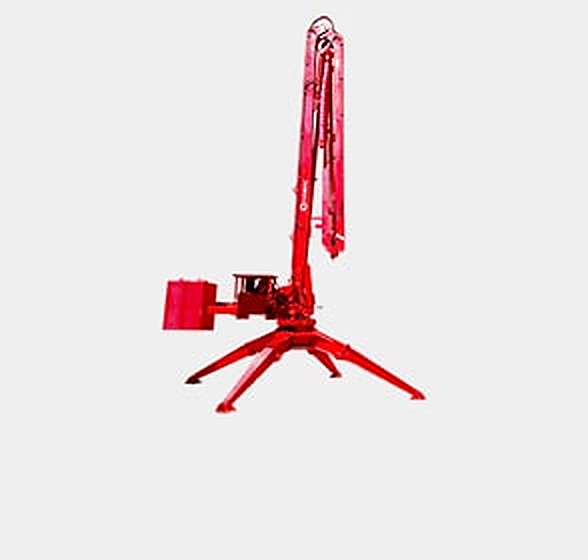
Spider hydraulic concrete placing boom for confined sites — HAMAC equipment supplied to concrete and aggregate projects worldwide.
Vertical pumping and pressure loss
Vertical delivery adds roughly 0.25 bar per metre of height for normal concrete, before friction losses in the pipe are counted. At 100 metres the static component alone is around 25 bar, which leaves little margin on a low-pressure pump and explains why high-rise work needs a pump with a high-pressure mode.
Friction depends on pipe diameter, mix design and pumping speed. A 125 mm line carrying a low-slump mix over 200 metres can require more pressure than a 150 mm line over the same distance. When a pump struggles, increasing pipe diameter is often more effective than increasing engine power.
Mix design for pumpability
A pumpable mix has enough fines and paste to lubricate the pipe wall, a controlled maximum aggregate size and a slump that stays workable for the duration of the pour. Gap-graded mixes and mixes with angular crushed sand are the most common causes of high pumping pressure.
Adding water to make concrete pump more easily is the wrong correction. It reduces the paste quality and causes segregation and bleeding at the discharge point. Adjusting the sand-to-total-aggregate ratio or adding a small dose of a pumping aid addresses the cause instead of the symptom.
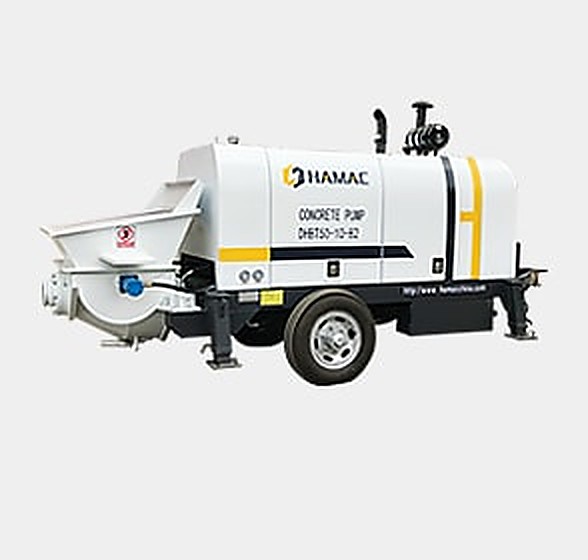
Trailer mounted concrete pump for long distance delivery — HAMAC equipment supplied to concrete and aggregate projects worldwide.
Clearing a blocked line safely
The first step is to stop pumping, reverse the pump briefly at low pressure and listen for movement. If the line remains blocked, depressurize fully before opening any joint. A pressurized line holds enough energy to injure an operator seriously, and this is the single most important safety rule on a pumping site.
Locate the blockage by tapping along the pipe; a dull sound indicates full pipe, a hollow sound the blockage. Once identified, close the isolating valve, relieve pressure and open only the section concerned. Never stand in front of an open coupling while pressure remains in the line.
Wear parts and their service life
The wear items are the delivery piston, the S-valve or seat, the wear ring and the pipe itself, particularly at bends. Service life depends on the abrasiveness of the aggregate and on pumping pressure. Crushed granite at high pressure can wear an S-valve in a few thousand cubic metres, while rounded river gravel can last several times longer.
Inspect the S-valve and wear ring every 500 to 1000 cubic metres, and measure rather than judge by appearance. A worn valve seat shows up first as a loss of pressure at the end of the stroke and a pulsing delivery, long before it fails completely.
Boom pump stability and outrigger practice
A boom pump transfers large overturning moments to the ground through its outriggers. Ground bearing capacity, not the machine, is usually the limiting factor. On fill, recent excavation or a basement slab of unknown thickness, spreader plates or timber mats are required, and the outriggers must be fully extended.
Boom operation should follow the manufacturer load chart. Slewing with a full pipeline of concrete at maximum reach produces the highest moment, and wind adds an additional load that is easy to underestimate on a tall boom. A trained operator and a banksman at the discharge point are not optional.
Where to go next
For the equipment side, see concrete pumping equipment; for plant-level design and layout questions, see concrete pumping solutions. If the project is in Iraq or a comparable market, the HAMAC team can provide reference installations and a configuration proposal against your daily output target.
HAMAC can prepare a layout drawing and a budgetary quotation against your daily output target, including the civils information your contractor will need.
Need help applying this to your project?
Send your material type, target output and site conditions to HAMAC engineers. You will receive a practical equipment configuration and a clear quotation, normally within one working day.
Questions about this topic
How often should pump pipes be replaced?
Inspect the wall thickness of straight sections and bends every few thousand cubic metres. Bends wear several times faster than straight pipe and should be treated as consumables.
What causes a blockage at the first elbow?
Usually a dry or poorly lubricated start, a mix that is too stiff, or a short-radius bend. Prime the line with mortar and use long-radius bends in the first section.
How far can a concrete pump deliver horizontally?
A trailer pump with a high-pressure mode can reach 300 to 500 metres horizontally in favourable conditions. Beyond that, friction losses and mix design usually make a relay or a different placing method more practical.
H
HAMAC Machinery Editorial Team
Written and reviewed by engineers and sales specialists who configure concrete batching plants, crushers, mixers and pumps for projects in more than 180 countries. Content is based on factory testing data and field feedback from delivered equipment.





 Company News