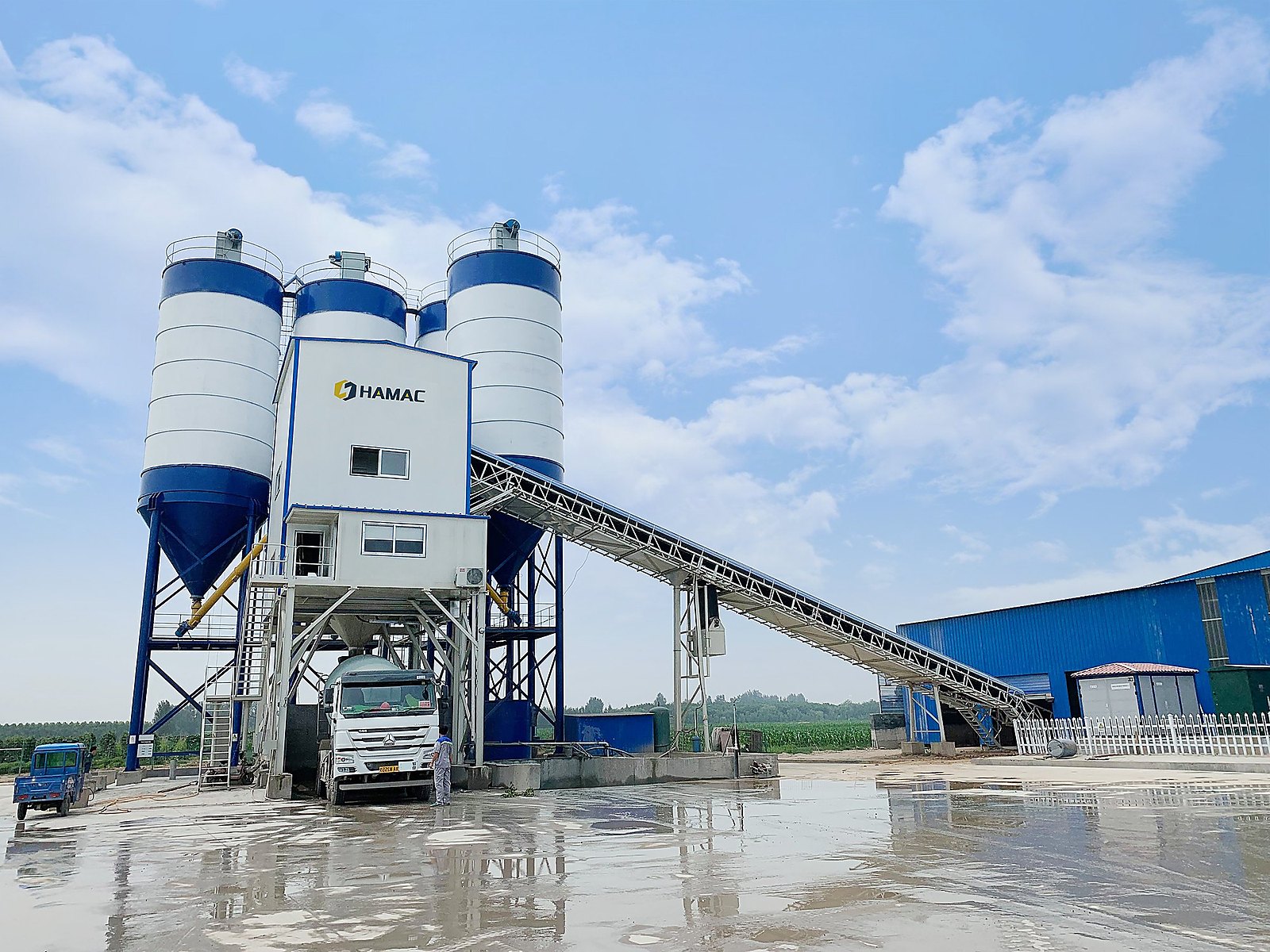
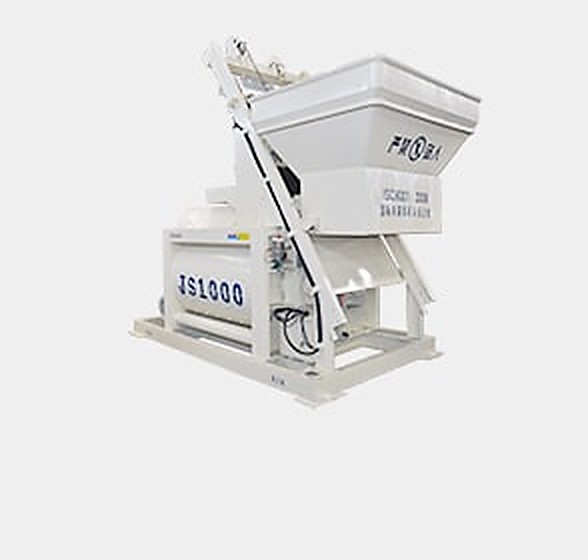
When the mixer is filled to its DRY FILLING CAPACITY, as the stone, sand and cement mix, the air spaces between stone chunks get filled with sand, and the air spaces around the sand grains get filled with cement. The density goes from about 100 lb/cu. ft. to 150 as it is mixed. Even the spaces around the cement powder get filled – with water. The whole volume reduces by 20% or more as a zero slump mix is made. But this zero slump mix still has lots of air spaces in it. If discharged in this state, you get an UNCOMPACTED YIELD of 20% less than the mixer capacity. When the mix is vibrated in the mould or form, all this extra air is expelled and it compacts by a further 15 to 20% to give the COMPACTED YIELD, which is 2/3 of the dry filling capacity. What does this mean to the user? It depends on the application: If the user needs 3” slump or less, the container (Tuckerbilt or bucket) capacity must hold the UNCOMPACTED YIELD. If the user needs 6” slump or more, the container (Tuckerbilt or bucket) capacity must hold the COMPACTED YIELD. If the user needs something in between, the container (Tuckerbilt or bucket) capacity must hold something IN BETWEEN. Use your judgment.
Everything is subject to modification without prior notice. For specific requests, we will refer to our technical department. Values indicated are not applicable in all applications and conditions and are subject to variations depending on the use and quantity of the product.
Configuration notes for mixer
A self-loading mixer removes the need for a separate batching plant and wheel loader on small and remote sites, but the batch cycle is longer, so daily output depends on travel distance on site. In practice, the delivered scope for this type of work usually includes:
- drum with hydraulic drive and reversible discharge
- front loading shovel with hydraulic lifting and tipping
- four-wheel-drive chassis rated for rough site roads
- weighing and water dosing system for consistent batch quality
Site and operating conditions
Equipment working in the destination market has to deal with local material grading, power supply stability and the availability of skilled operators, all of which influence the final configuration more than the catalogue rating does. These points are reviewed during the technical clarification stage, because they change foundation design, electrical protection and the maintenance schedule.
What buyers should check before ordering
- confirm the drum volume and the actual mixed output per batch
- check whether the loading shovel can reach the aggregate stockpile height on your site
- verify the chassis and axle rating for the road conditions you will use
- ask about water dosing accuracy and how the operator sets the mix ratio
- confirm spare parts availability for hydraulic pumps and drum seals
Key takeaways
- Base the selection on daily output and actual material, not on a model number.
- Confirm the quoted capacity matches your material and site conditions.
- Plan wear parts and a spare parts kit from the first year of operation.
HAMAC can review your requirement and propose a comparable configuration with a clear scope, schedule and support plan.





 Company News