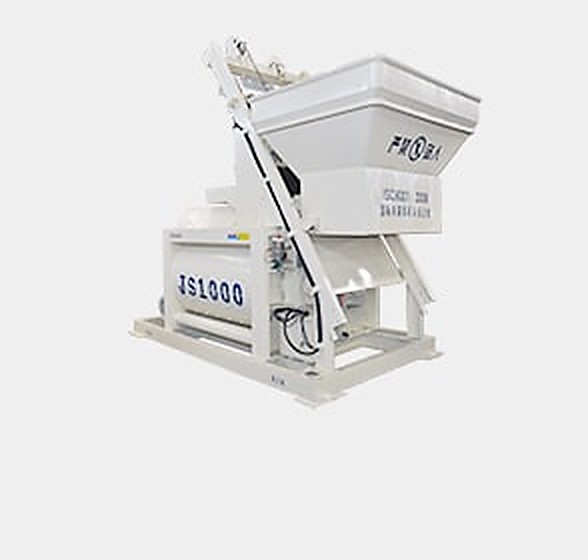
Up to 30% greater pan volume than many others rated for the same output, ensuring that it will carry the full rated load and mix it properly.
Performs equally well on full and small partial batches – the ARMS do the mixing.Paddles are needed for discharge only.
Large reduction gearbox and oil bath is cool running.Compare with others using small commercial gear units in tightly cramped, unventilated spaces that can only withstand intermittent duty without overheating and eventual breakdown.
5 year / 10,000 hour guarantee on gearboxes.
Three-armed stars have better mixing action than two-arm and last longer.
Perfect countercurrent mixing action gives higher strength concrete, saves 10 – 15% cement compared with pan or drum mixers.
Rubber sealed discharge doors run smoothly and eliminate leakage of water.
Optional additional discharge doors, to 4 maximum.
Complete cleanout without requiring extra cleanout mechanisms.
Hydraulic door mechanism gives powerful controllable open/close action.
Motors and gears rated for occasional startup with full load, without complication of hydraulic coupling. Not recommended for regular use.
Large half-moon cover (smaller models) or wide segmented covers (to MP3750) giving safe, quick access for cleaning.
High-security locking cover latch disables startup, ensuring safety even if separate lockout switch is overlooked.
15 mm Ni-Hard cast iron liner tiles and mixing blades give more wear life than most other linings.
Small, identical floor tiles are low cost and can be individually replaced.
Optional Chromium Carbide cladded plates and paddles available at extra cost for extreme wear applications.
Optional rubber blades/paddles for use with aggressive aggregates.
Electrical wiring meets UL requirements.Motors are CE;UL available.
Best value for money in its class.
Need help applying this to your project?
Send your material type, target output and site conditions to HAMAC engineers. You will receive a practical equipment configuration and a clear quotation, normally within one working day.
Questions about this topic
How do I choose batching plant capacity?
Estimate the concrete volume per day, then divide by the effective working hours. Add 20 to 30 percent headroom for peak demand. A 35 m³/h plant suits small contractors; 50 to 75 m³/h suits commercial supply; 90 m³/h and above suits large projects.
Which mixer type should I choose for my concrete?
Twin-shaft compulsory mixers are the default for commercial concrete because of short mixing cycles and uniform output. Planetary mixers suit high-grade or special mixes, and drum mixers suit smaller, simpler operations.
How often should wear parts be replaced?
Mixer blades and liners are inspected weekly and normally replaced every 6 to 12 months depending on abrasive content. Belt scrapers, screen meshes and pump wear plates follow the same inspection rhythm.
Can the plant be upgraded later?
Yes. Modular batching plants allow additional silos, a larger mixer or an upgraded control system to be added later without replacing the whole structure.
H
HAMAC Machinery Editorial Team
Written and reviewed by engineers and sales specialists who configure concrete batching plants, crushers, mixers and pumps for projects in more than 180 countries. Content is based on factory testing data and field feedback from delivered equipment.





 Company News