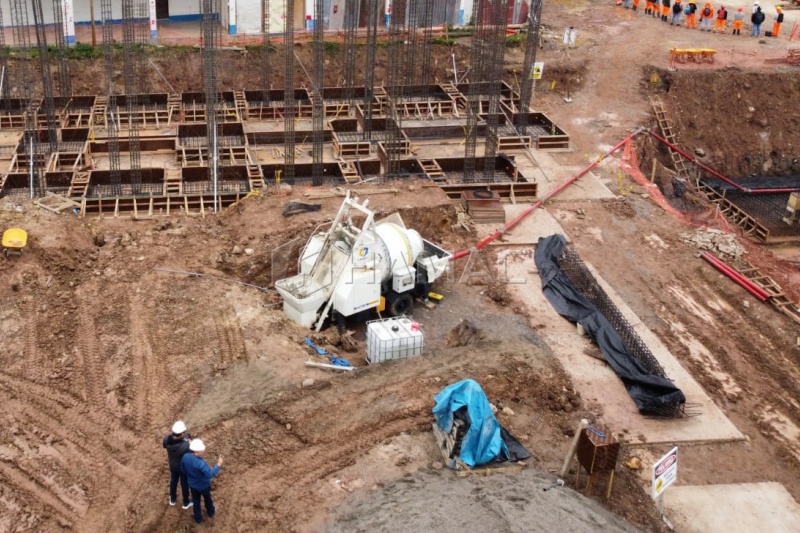
Mobile Concrete Batching Plant Manufacturer Hamac Machinery is a company specializing in the research, design and production of concrete machinery, such as, various types of concrete batch plant, bolted type silo, concrete mixer, concrete pumping machines, concrete block making machine with experience of more than 20 years. We have the biggest producing workshop in China and partner in Peru. Since the establishment of our company, the concrete machinery for sale in our company has been exported to many countries around the world, such as, Philippines, Chile, Mexico, Bolivia, Colombia, Romania, Kenya, Ethiopia, Ghana, Ecuador etc… Every customer who receives our machines will give us high praise in our good service, high quality and reasonable price of our equipment. So if you would like to know our mobile cement batching plant price and more specifications, contact us now for quotation, we will reply you in 24 hours.
Advantages of HAMAC Mobile Concrete Batch Plant for sale
1. Easy to move. Both the wheels of the trailer type and the special steel frame structure of the modular type are designed to make the equipment easy to move. Except for screw conveyor and bolted silo, the whole device can be towed and moved after the front end of the whole mixing station falling down.
2. Small occupation area. The structure of mobile type is more compact compared with the stationary type, so it takes relatively little space.
3. High working efficiency. We use double horizontal shaft forced mixer with excellent performance as supporting main machine, which has the advantages of fast stirring speed, wide stirring range. Our equipment not only works efficiently, but also can guarantee the stability of concrete quality and performance.
4 .Low foundation cost. The mobile type concrete batching machine can be installed at any time without special foundation. Customers only need to ensure the site area and ground solid, which can help customers save costs.
5. High degree of automation, strong maneuverability, simple operation and good stability.
6. The structure is firm, the space layout is compact and reasonable, which can guarantee the flexibility and the production capacity at the same time.





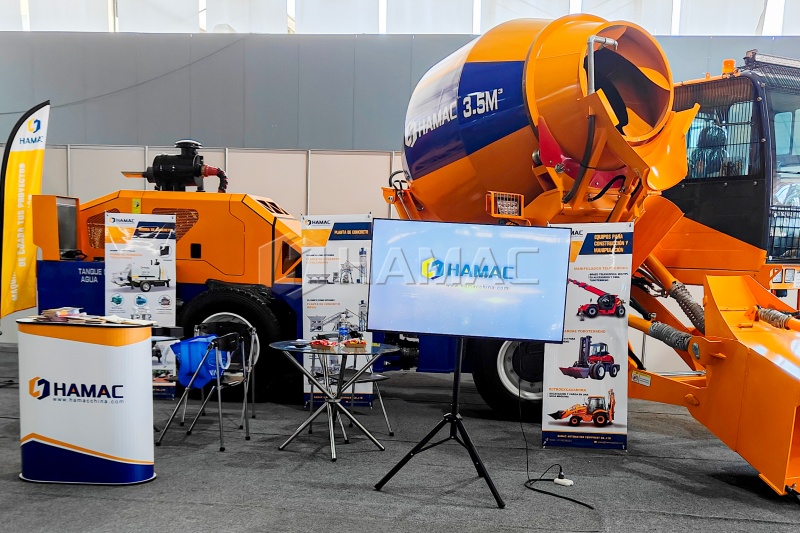
 Exhibitions